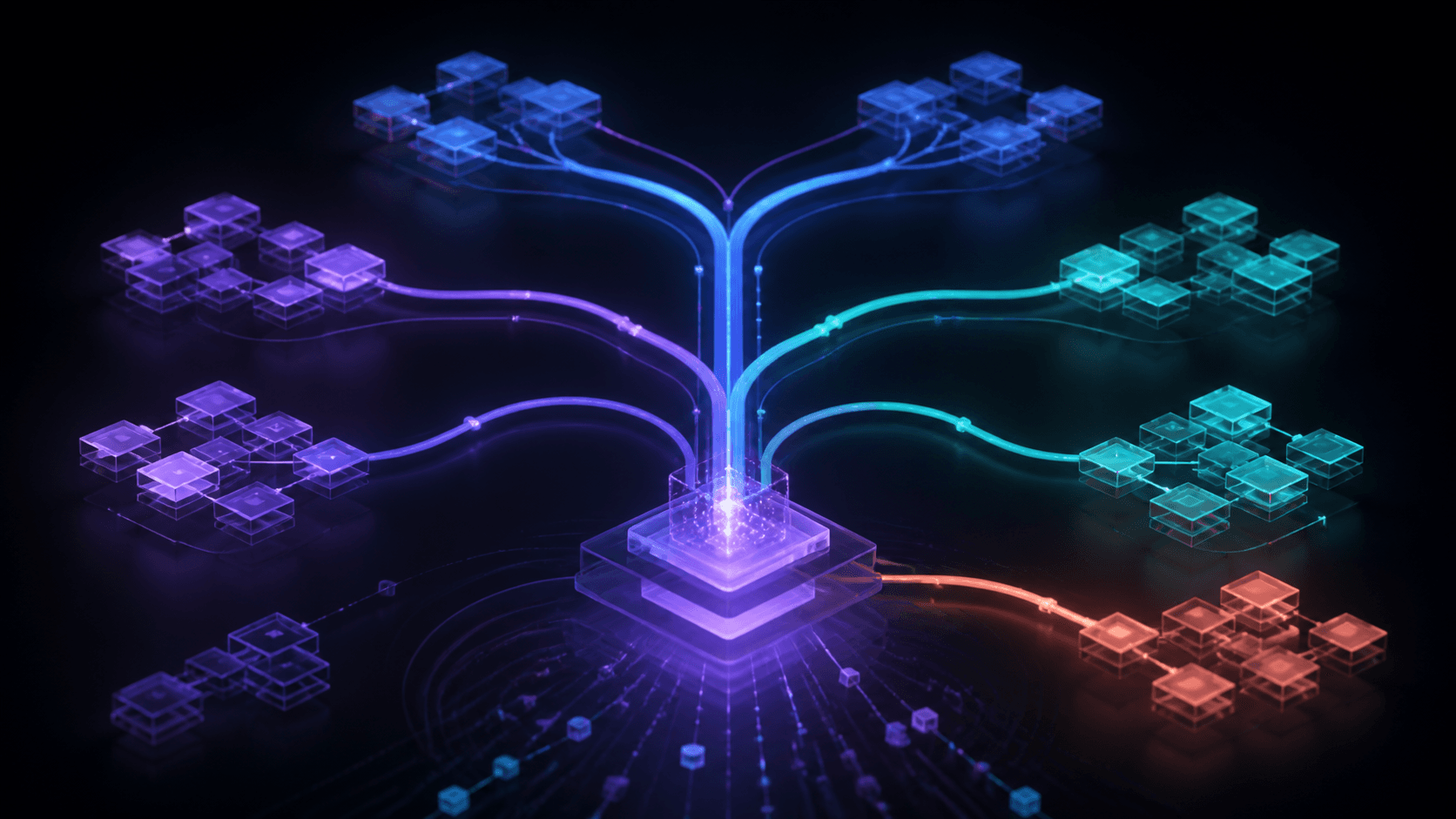

AI coding has changed the constraint on software teams. Producing a first draft is no longer the slow part. Understanding what changed, proving that it works, and deciding whether it is safe to ship are becoming the bottleneck.
Imagine that your team can generate five times as much code as it did last year. That sounds like a fivefold productivity gain—until the same people are asked to review five times as many pull requests. Faster generation without a better review system simply moves the queue downstream.
That is the reason to choose Unstoppable Code. It is not another autocomplete box competing to write the next line. It is an agentic development workspace for coordinating the whole path from a request to a reviewed, verified change.
Most AI coding tools optimize for the first draft
There are excellent copilots, editors, command-line agents, and frontier models. Many of them can produce a plausible implementation from a prompt. The harder questions begin after the code appears:
- Did the agent understand the repository's actual conventions?
- Did it preserve behavior outside the files it touched?
- Were the right tests added and run?
- Did anyone review the change independently of the model that wrote it?
- Can a human understand the remaining risk without reading a huge diff cold?
The model matters, but the workflow around the model matters more as the volume of generated code grows. Unstoppable Code is built around that workflow.
Choose a system for finished work, not just generated code
An Unstoppable Code task stays connected to a real repository. The agent can read project instructions, inspect existing tests and patterns, make changes in an isolated worktree, run the project's own commands, and show the resulting diff in the same workspace as the plan and conversation.
That changes the unit of work. The goal is not “produce some code.” The goal is “produce a change that fits this codebase and bring back the evidence needed to review it.”
Plans, terminals, changed files, checks, review findings, and the agent's reasoning remain attached to the task. When a human joins, they do not have to reconstruct the story from an editor, a terminal window, a chat transcript, and a pull request scattered across different tools.
Use a different model to review the model that wrote the code
A model is naturally good at defending the assumptions it already made. An independent reviewer starts with different blind spots, different strengths, and no attachment to the original implementation.
Unstoppable Code supports Claude, Codex, and Ollama-backed workflows, so coding and review do not have to be assigned to the same provider. Its built-in multi-provider code review runs separate tracks for repository compliance, methodical correctness, and security, then synthesizes their evidence into one report. The report records the source models, validated findings, areas of agreement or disagreement, and a consistent risk score.
This is more useful than asking one agent, “Are you sure?” It creates genuine separation between implementation and review while still giving the human one coherent result to evaluate. Agreement is evidence, not automatic proof; a well-supported finding still matters even if only one reviewer catches it.
Move review earlier, before it becomes a human queue
Human review is most valuable for product intent, architecture, tradeoffs, and accountability. It is a poor use of attention to discover that a test was never run, an instruction file was ignored, or a straightforward defect survived the first implementation pass.
Unstoppable Code pipelines can make verification and review part of the work instead of a cleanup step at the end. A pipeline can gather repository context, refine a plan, implement it, run targeted checks, review the diff, send actionable findings back through a fix loop, and report anything unresolved.
The result is not “AI replaces code review.” The result is that human review starts later in the quality process and at a higher level. Reviewers receive a change that has already been challenged, along with a record of what passed, what changed, and what still deserves judgment.
Make the quality bar explicit and repeatable
Teams already have a definition of good software, but it is often spread across tribal knowledge, pull-request habits, repository instructions, and CI jobs. Agents cannot reliably aim at a standard that has never been made explicit.
Pipelines turn that standard into a repeatable, source-controlled process. The same implementation stages, verification commands, reviewer perspectives, and completion checks can run for every relevant task. The workflow is inspectable YAML, so a team can review and evolve it like any other engineering asset.
The built-in multi-provider review also applies one scoring direction across reviewers: high scores mean high confidence and low risk; lower scores require more attention. That score is not a permission slip to merge. It is a compact way to help humans decide where to spend their limited review time.
Run agents in parallel without putting every task in the same checkout
Parallel agents are only useful when their work stays isolated. Unstoppable Code uses Git worktrees so a feature, a bug fix, and an investigation can move forward on separate branches without repeatedly stashing files or letting one task overwrite another.
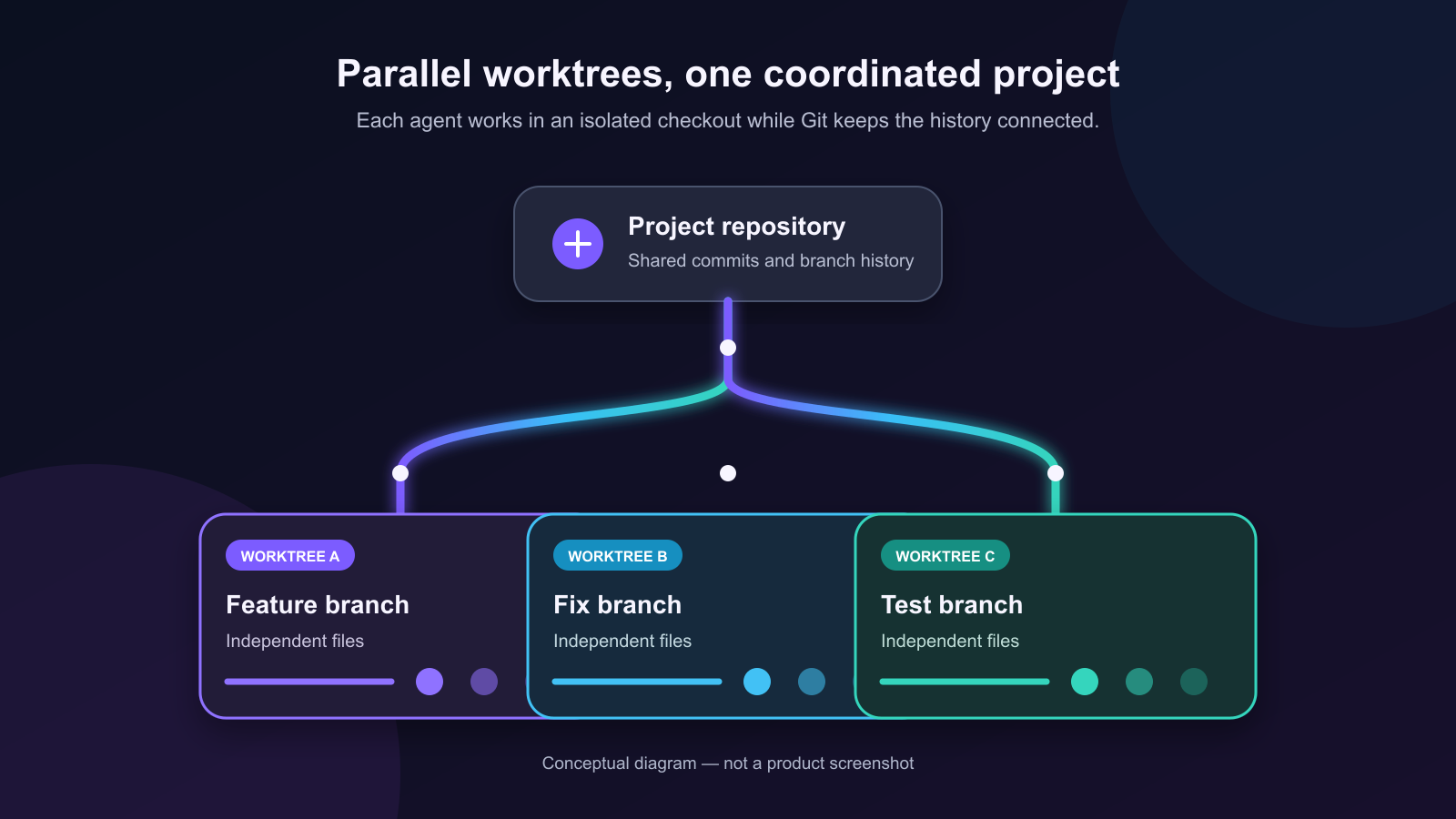
Each worktree has its own working files and branch while sharing the same Git history. That makes parallelism easier to inspect and keeps the final unit of delivery familiar: a normal branch and pull request.
Keep model choice and cost under your control
Many AI development products bundle model access into another subscription. That can mean paying again for inference you already receive from Anthropic or OpenAI.
Unstoppable Code's Free tier can use your existing Claude or Codex subscription and includes unlimited local workspaces and parallel agents. Ollama provides an option for models you manage locally. AI Credits are available when you want a gateway model or additional capacity, but metered API usage does not have to be the default path for every local task.
The practical difference is flexibility. Choose a model because it fits the work, use a second perspective when independent review matters, and keep the runner separate from the inference access you already pay for.
Who should choose Unstoppable Code?
Unstoppable Code is a strong fit when your problem is no longer “How do I get AI to write code?” but one of these:
- You are coordinating several agent tasks across a real codebase.
- Review capacity is not keeping pace with generated pull requests.
- You want coding and review performed by independent models.
- Your team needs a repeatable quality process instead of one-off prompting.
- You want agents grounded in repository instructions, tests, and Git history.
- You want to use existing provider subscriptions instead of rebuying the same model access through every tool.
If all you need is occasional autocomplete, a lightweight editor extension may be enough. If you need to move a change from idea to evidence-backed review, Unstoppable Code is designed for the larger job.
Start with one bounded task
A good first task has a clear outcome and a repository with working tests. Open the project, describe the goal and constraints, review the proposed plan, and let the agent work inside an isolated branch. Then inspect the diff and evidence before merging.
That bounded loop—context, plan, implementation, verification, and review—is the core of Unstoppable Code.
The answer to “Why Unstoppable Code?”
Choose Unstoppable Code because generating code is only the beginning. It gives coding agents an engineering system around them: isolated workspaces, repository context, repeatable pipelines, independent reviewers, verification loops, and a clear handoff to humans.
The result is not code without people. It is a tighter collaboration between developers and agents: the agent handles more of the mechanical loop, while the developer retains control of scope, architecture, and the final decision to ship.
The objective is not the largest possible diff. It is more trustworthy software with less wasted human attention.
Download Unstoppable Code and start with the Free tier using the Claude or Codex subscription you already have.